


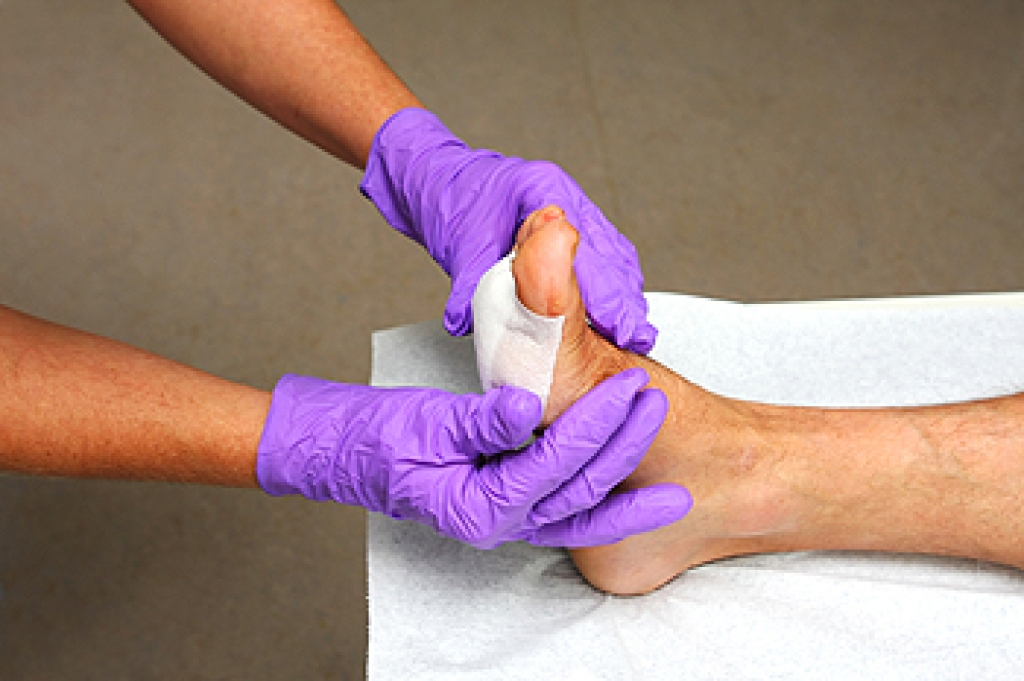
Foot wounds can become serious when they do not move through the normal healing process. A wound that fails to heal properly over time is considered a chronic wound. Several types can affect the lower legs and feet, including diabetic, arterial, and pressure ulcers. Diabetic foot ulcers often develop because nerve damage can reduce the ability to feel pain or repeated injury. Poor circulation can further interfere with healing. Chronic wounds require careful evaluation because their cause influences the type of treatment that may be needed.
Evaluating a non-healing foot wound involves more than examining the injured skin. Medical professionals consider the wound’s location, size, and depth. They may also evaluate drainage and the type of tissue within the wound. Blood flow is especially important because poor circulation can prevent damaged tissue from healing normally. Diabetic foot ulcers commonly develop on the toes or the bottom of the forefoot and may be surrounded by thick callused skin. Some wounds can extend into deeper tissues. Imaging may be needed when there is concern that an infection has reached the bone.
A podiatrist can evaluate a foot wound, identify factors interfering with healing, and determine an appropriate wound-care plan. Treatment depends on the type of wound and its underlying cause. Professional care may involve removing dead tissue, controlling infection, and selecting appropriate dressings. For diabetic foot ulcers, reducing pressure on the affected area is also an important part of treatment. A podiatrist can also evaluate circulation and nerve function to identify problems that may affect healing. Certain wounds may require coordinated treatment with vascular or other medical specialists. Early professional attention is important because chronic foot wounds can lead to deeper infection and other serious complications. If you have a foot wound that is not healing normally or continues to worsen, it is suggested that you consult a podiatrist for an evaluation and appropriate wound-care treatment.
Wound care is an important part in dealing with diabetes. If you have diabetes and a foot wound or would like more information about wound care for diabetics, consult with Eveleigh Williams, DPM from Sole 2 Sole, PC. Our doctor will assess your condition and provide you with quality foot and ankle treatment.
What Is Wound Care?
Wound care is the practice of taking proper care of a wound. This can range from the smallest to the largest of wounds. While everyone can benefit from proper wound care, it is much more important for diabetics. Diabetics often suffer from poor blood circulation which causes wounds to heal much slower than they would in a non-diabetic.
What Is the Importance of Wound Care?
While it may not seem apparent with small ulcers on the foot, for diabetics, any size ulcer can become infected. Diabetics often also suffer from neuropathy, or nerve loss. This means they might not even feel when they have an ulcer on their foot. If the wound becomes severely infected, amputation may be necessary. Therefore, it is of the upmost importance to properly care for any and all foot wounds.
How to Care for Wounds
The best way to care for foot wounds is to prevent them. For diabetics, this means daily inspections of the feet for any signs of abnormalities or ulcers. It is also recommended to see a podiatrist several times a year for a foot inspection. If you do have an ulcer, run the wound under water to clear dirt from the wound; then apply antibiotic ointment to the wound and cover with a bandage. Bandages should be changed daily and keeping pressure off the wound is smart. It is advised to see a podiatrist, who can keep an eye on it.
If you have any questions please contact our office located in Olympia Fields, IL . We offer the newest diagnostic and treatment technologies for all your foot and ankle needs.